Table Of Content
- Enzyme engineering for functional lipids synthesis: recent advance and perspective
- AI-enhanced protein design makes proteins that have never existed
- Targeting MYC with modular synthetic transcriptional repressors derived from bHLH DNA-binding domains
- Improved cytosine base editors generated from TadA variants
- A computationally designed chimeric antigen receptor provides a small-molecule safety switch for T-cell therapy
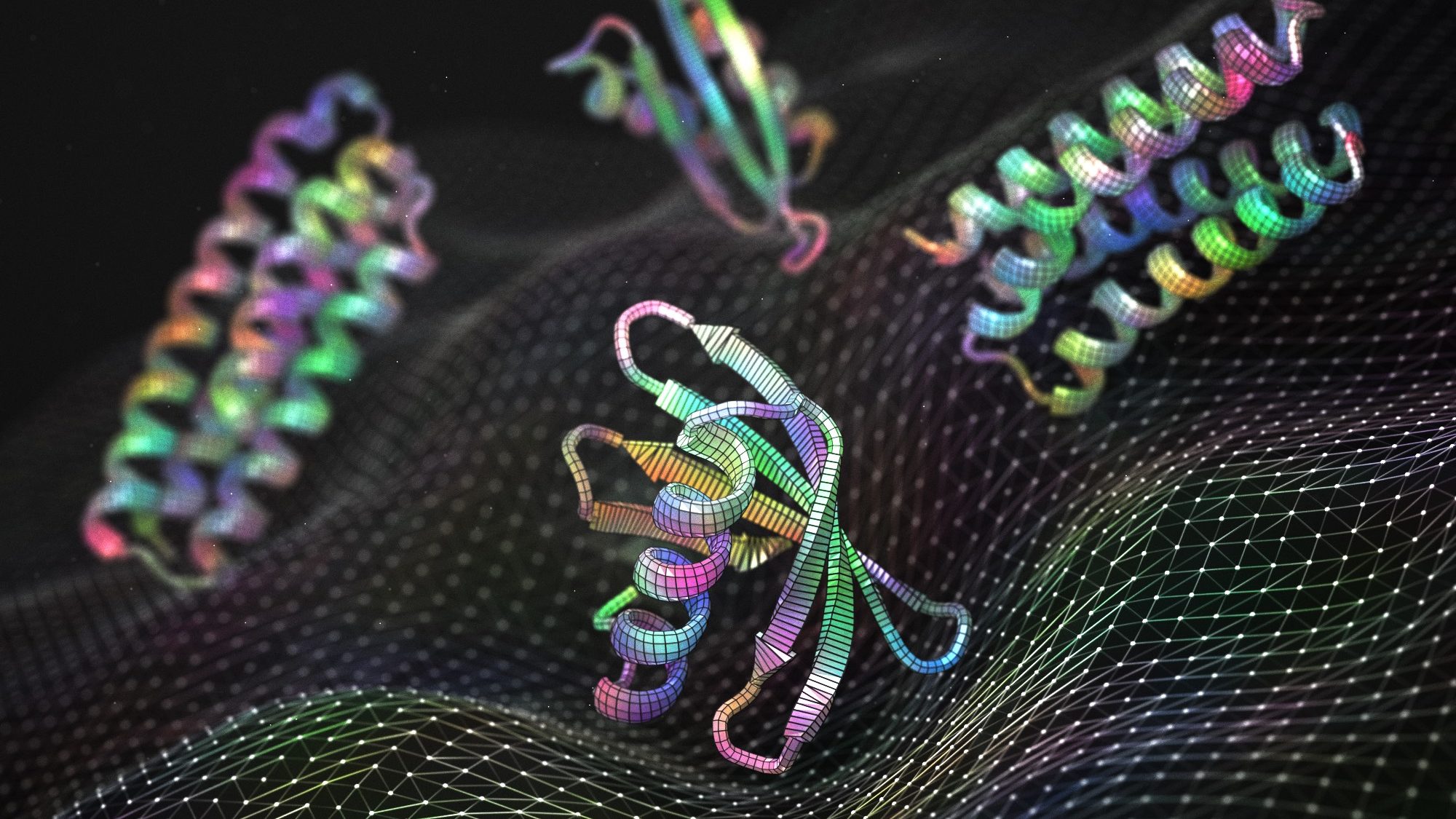
Tandem repeat proteins made of a series of identical helix–loop–helix–loop structural motifs can be systematically assembled (67). By modulating the curvature, alpha tandem repeat proteins can form closed toroid structures (68). A large number of proteins with diverse shapes can be generated by designing rigid junctions to connect helical repeat proteins (69).
Enzyme engineering for functional lipids synthesis: recent advance and perspective
In the following sections, we describe advances in the design in the areas of binding proteins for ligands and other proteins, large protein assemblies, membrane proteins, and protein switches. Solutions of fixed backbone side-chain design problems are sensitive to the backbone structures used as input. Because the Lennard-Jones potential term in scoring functions (see the section below) scales as the 12th power of distance when two atoms are close to each other, a small adjustment to the backbone structure may result in a considerable energy change.
AI-enhanced protein design makes proteins that have never existed
“A regional hub is a very natural thing to emerge,” said Portland, Ore.-based Jonathan Cohen, vice president of applied research at NVIDIA, which is investing heavily in AI-mediated drug design. Research on it began here as an undergraduate project and would go on to form the basis of a spinout company. Advanced Drug DeliveryNanoscale protein assemblies that move therapeutics to specific cells within the body. They are found inside every living thing and act as structural components, transporters, signaling molecules, and much more.
Targeting MYC with modular synthetic transcriptional repressors derived from bHLH DNA-binding domains
“They are models, so you have to take them with a grain of salt, but now you have this extraordinarily large amount of predicted structures that you can build upon,” says Zanghellini, who says this tool is a core component of Arzeda’s computational design workflow. One effective strategy to understand protein sequence and structure is to approach them as ‘text’, using language modeling algorithms that follow rules of biological ‘grammar’ and ‘syntax’. In a recent publication, Madani and colleagues describe a language modeling algorithm that can yield novel computer-designed proteins that can be successfully produced in the lab with catalytic activities comparable to those of natural enzymes. Language modeling is also a key part of Arzeda’s toolbox, according to co-founder and CEO Alexandre Zanghellini. For one project, the company used multiple rounds of algorithmic design and optimization to engineer an enzyme with improved stability against degradation.
Dual-use dilemma: AI and the future of protein design - MR Online
Dual-use dilemma: AI and the future of protein design.
Posted: Tue, 09 Apr 2024 07:00:00 GMT [source]
Self-Assembling NanomaterialsAtomically precise materials with applications in solar energy, imaging, and basic research. Reprinted with permission from Tsien, R. Y. Angewandte Chemie International Edition 2009, 48, 5612–5626. All rights are reserved, including those for text and data mining, AI training, and similar technologies. The world of proteins is incredibly complex, offering endless possibilities for exploration and discovery.
De novo design of high-affinity binders of bioactive helical peptides - Nature.com
De novo design of high-affinity binders of bioactive helical peptides.
Posted: Mon, 18 Dec 2023 08:00:00 GMT [source]
Both max-product and sum-product belief propagation have been used to optimize protein design. Other powerful extensions to the dead-end elimination algorithm include the pairs elimination criterion, and the generalized dead-end elimination criterion. This algorithm has also been extended to handle continuous rotamers with provable guarantees. The IPD generates open-source AI tools to craft protein-based therapeutics, vaccines, materials and biosensors, and its Seattle-area spinouts and affiliated companies interact with each other and partner with larger biopharma companies. If you want an amazing protein label that stands out from the competition, work with a professional designer.
Improved cytosine base editors generated from TadA variants
Challenges are particularly apparent in the design of proteins with new functions (Fig. 7). New protein structures can be designed with considerable success rates without experimental optimization (Table 1), but the activities of proteins derived directly from the computational design are often weaker than achievable activities of naturally evolved proteins. Therefore, computational designs are often (although not always) optimized by experimental methods such as site saturation mutagenesis (4, 20). The de novo ligand-binding site design requires high accuracy in sampling and scoring.
Design of protein-binding proteins
Today, AlphaFold 2 is used routinely by many structural biologists, with over 200 million structures predicted. We took advantage of the increased size of these oligomers (compared to the smaller unconditional and fold-conditioned monomers described above) and collected negative stain electron microscopy (nsEM) data on a subset of these designs across different symmetry groups. For most, distinct particles were evident with shapes resembling the design models in both the raw micrographs and subsequent two-dimensional (2D) classifications (Fig. 3 and Extended Data Fig. 5f).

A computationally designed chimeric antigen receptor provides a small-molecule safety switch for T-cell therapy
The same feat can be achieved with protein sequences and structures, where the algorithm draws on a rich repository of real-world biological information to dream up new proteins based on the patterns and principles observed in nature. To do this, however, researchers also need to give the computer guidance on the biochemical and physical constraints that inform protein design, or else the resulting output will offer little more than artistic value. A different strategy incorporates human expert knowledge into the process of backbone generation for design. The TopoBuilder (72) protocol lets designers build proteins in a bottom-up approach starting from functional motifs (e.g., a helix in a binding interface). Designers define the sizes and three-dimensional coordinates of secondary structure elements.
By simulating various sequences and analyzing the resulting structures, researchers can design proteins with desired functions or properties. In addition to the new algorithms’ power, the tremendous amount of structural data captured by biologists has also allowed the protein design field to take off. The Protein Data Bank, a critical resource for protein designers, now contains more than 200,000 experimentally solved structures. The AlphaFold 2 algorithm is also proving to be a game changer here in terms of providing training material and guidance for design algorithms.
Another crucial component of the design is the orthogonality of the pairs—unintentional cross-reactivity between different coiled-coil monomers would prevent the proper assembly of the tetrahedron. The resulting 3D structure was imaged by atomic force microscopy (AFM), and the proximity of the N- and C-termini at the same vertex was confirmed by a split-fluorescent protein assay. Protein origami is attractive because such structures can be easily functionalized for use in pathway engineering, difference imaging, and novel vaccines. However, a rational protein design approach must model some flexibility on the target structure in order to increase the number of sequences that can be designed for that structure and to minimize the chance of a sequence folding to a different structure. For example, in a protein redesign of one small amino acid (such as alanine) in the tightly packed core of a protein, very few mutants would be predicted by a rational design approach to fold to the target structure, if the surrounding side-chains are not allowed to be repacked. The success rate is defined as the percentage of reported designs in each study that adopt the designed structure (folded, blue; experimental structure determined, orange) or function (green, red).
By continuing to design protein building blocks that are more sensitive to stimuli such as pH, light, ionic strength, and temperature, we will expand the functionality of designed materials in the future. We still do not have the theoretical or computational tools to design any protein structure or any protein-protein interaction interface on demand. Wild-type fluorescent proteins are often oligomers, a property that could interfere with the natural activity of a protein of interest. A common design strategy to prevent oligomerization is to introduce unfavorable electrostatic interactions to disrupt the subunit interfaces.
In particular, AbDesign breaks proteins from a structure family into a few modular segments based on structural alignments and then recombines these segments into new backbones. AbDesign is able to build large numbers of similar structures even for moderately sized families of homologs. An elegant example of a protein design approach to delineate protein function in vivo is seen in the work of Shokat et al.73 By designing a protein kinase with altered ATP-binding specificity they were able to identify substrates of that kinase. The strategy was to first introduce mutations in the kinase that enlarged the substrate-binding pocket such that bulky ATP derivatives could be bound. The binding pocket on the wild-type kinase is too small to bind the bulky ATP derivative.
Parameters such as sheet curvatures, loop types, and secondary structure lengths were sampled during a hierarchical backbone assembly process. Thousands of stable designs with diverse pocket geometries were identified by a high-throughput yeast surface display experiment. We solved the structure of the highest affinity Influenza binder, HA_20, in complex with Iowa43 HA using cryo-EM (Extended Data Table 1). Raw electron micrographs revealed a well-folded HA glycoprotein with clearly discernible side, top and tilted view orientations suspended in a thin layer of vitreous ice (Extended Data Fig. 9a). The 2D class averages further show clear secondary structure elements corresponding to both Iowa43 HA (Extended Data Fig. 9b), as well as the HA_20 binder bound to the stem (Fig 6e). The 3D heterogenous refinement without symmetry revealed full occupancy of all three HA stem epitopes by the HA_20 binder.




No comments:
Post a Comment